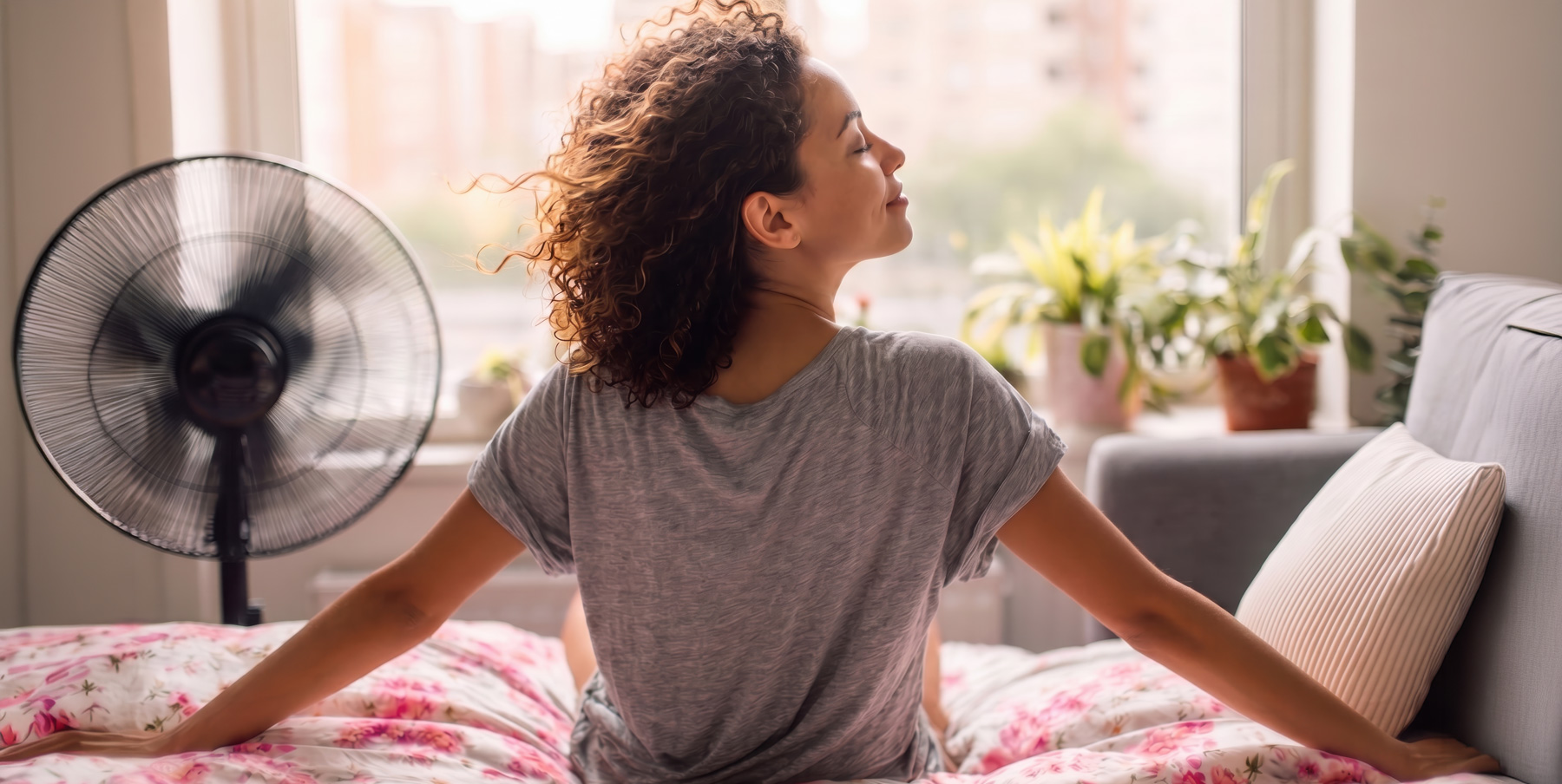
If you sleep eight hours and wake up worn out, the temperature of your bedroom may be the reason, and it works through a piece of physiology you can actually use.
Your Body Cools Down To Fall Asleep
Falling asleep depends on a drop in core body temperature. Research on adults who sleep poorly found that a slower, weaker decline in core temperature before sleep went along with a higher heart rate and lower heart rate variability during the night.¹ Heart rate variability tracks how well the calming branch of your nervous system is working while you sleep. When the temperature drop was blunted, that recovery was weaker, meaning the cooling wasn’t a side effect of sleep. It’s part of how sleep begins and deepens.
A Warm Room Steals Your Deepest Sleep
When the air stays hot, the body can’t shed heat the way it needs to. A review of heatwaves and sleep found that excessive heat shortens sleep and breaks it into fragments, and it specifically depletes deep N3 sleep and REM sleep. Those are the stages that handle physical recovery and emotional processing. The research links that loss to worse cognitive performance, weaker emotional function and higher susceptibility to chronic health conditions.² Eight hours in a hot room can leave you short on the sleep that matters most.
A Cooler Room Has A Target Range
There’s a temperature range worth aiming for. A study that followed 50 older adults in their own homes found sleep was most efficient when nighttime temperature stayed between 68 and 75°F. When the temperature climbed past that range, sleep efficiency dropped 5 to 10%.³ The study found the effect varied a lot from person to person, which means the right setting for you may take some testing. Separate research found that added heat exposure raised the risk of losing an hour or more of sleep, with women, city dwellers and people with chronic illness most affected.⁴
A Warm Bath Helps You Cool Faster
Here’s a move that may sound backwards. Warming up before bed helps you cool down afterward. In one study, people who took a long soak in a bathtub 1.5 to 2 hours before bed fell asleep faster than people who only showered, and they rated their sleep as better. The soak raised body temperature about 1.6°F, and that larger rise led to a steeper drop by bedtime, the same drop that signals your body to sleep.⁵
At the end of the day, cooling the room a few degrees costs little. And a warm bath an hour or two before bed is free. Try one this week and let your body settle into the deeper, steadier sleep it can reach when the temperature is on its side.
The information in this article is intended for educational and inspirational purposes only and does not constitute medical advice. Please consult a qualified healthcare professional before making changes to your exercise routine or health practices, especially if you are managing a medical or mental health condition.